We provide daily dive trips and dive courses around the island of Nusa Penida, Indonesia
Looking for tips and tricks about diving, marine life or what to do in Nusa Penida? Follow us on our blog for weekly updates from the team!



Renowned as Nusa Penida’s most popular underwater paradise, diving Manta Point is a bucket list experience, attracting divers from all around the world for the chance to experience diving with the majestic, gentle giants found beneath the surface.
Join us, as we dive into the specifics about this site, including the location and topography of the dive site, the fascinating marine life you can encounter, diving conditions, environmental considerations, helpful tips, and the suitability for various courses so that you know what to expect for your unforgettable visit when diving Manta Point.
Situated on the South-West coast of the island, beneath the towering island landscape, Manta Point takes around 35-45 minutes to get to from Scuba Junkie Penida, depending on the waves.
Due to the location of this site, conditions for diving Manta Point are more affected by wind and swell than most of the other dive sites around the island. We check conditions daily when planning all our dives, but for diving Manta Point in particular this is especially important, as larger waves can make it unsafe to access and dive.
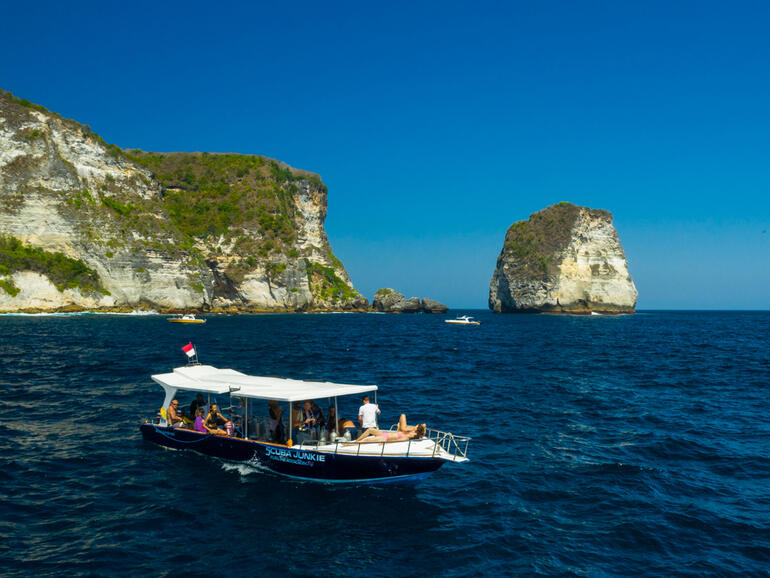
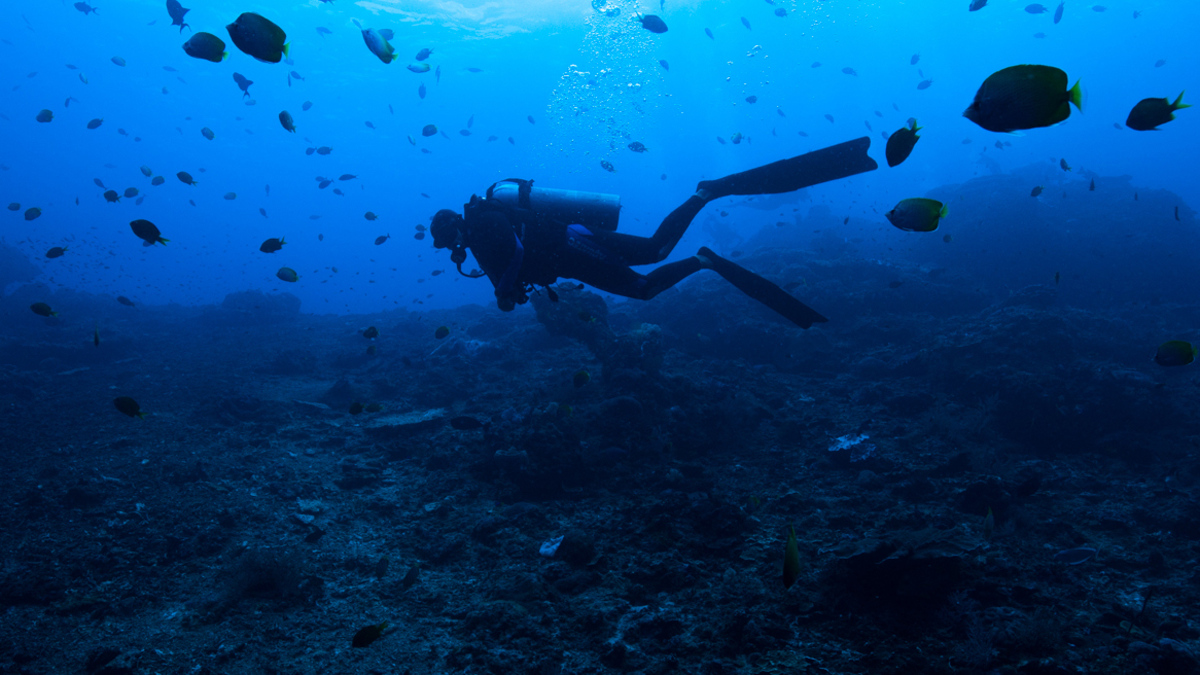
The majority of Manta Point is a flat, rocky plateau with an average maximum depth between 14m – 18m, creating a broad, open reef structure as you descend.
In the shallower areas, large boulders loom over the reef, creating dramatic backdrops and picturesque swim-throughs to explore that also serve as strong visual reference points and add to the sense of scale and atmosphere when you’re diving here.
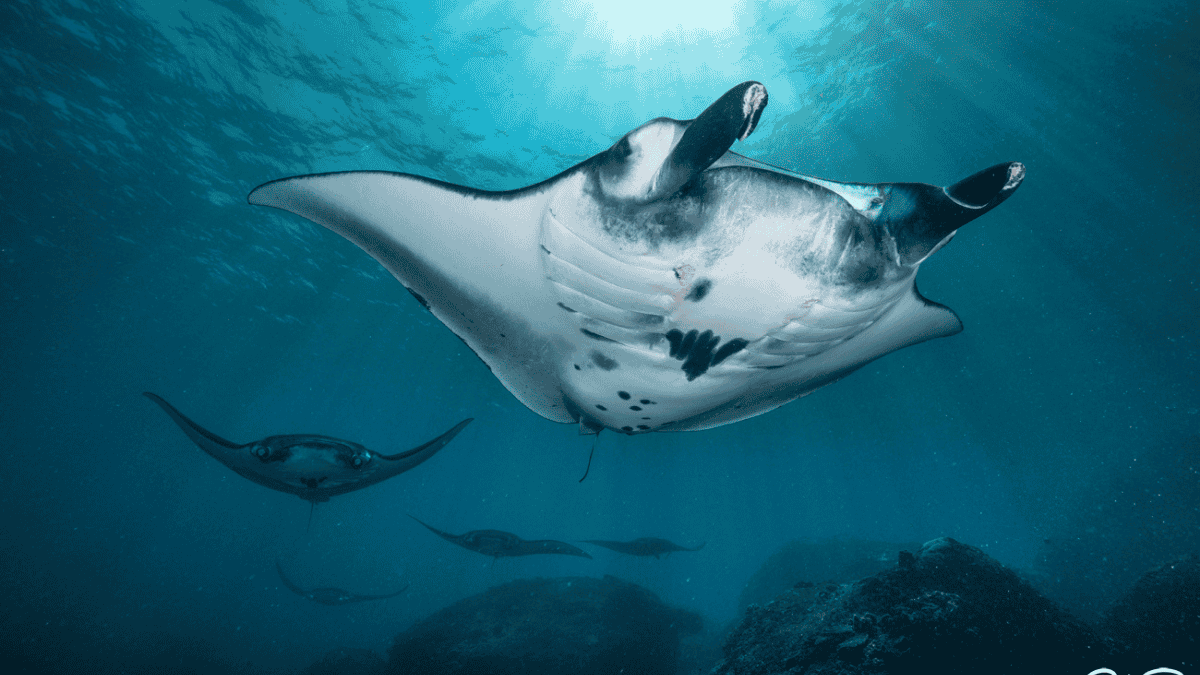
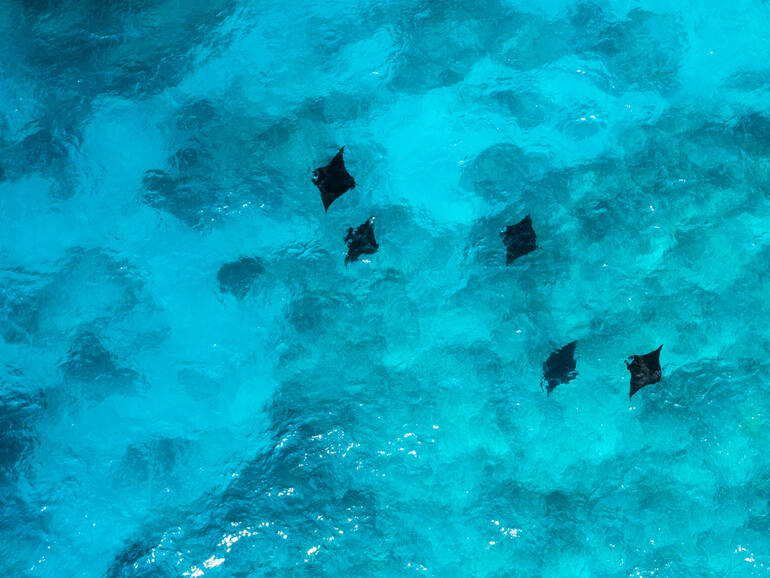
One of the most important features of diving Manta Point is its manta cleaning stations. These are specific spots on the reef where small fish such as cleaner wrasse live and remove algae, parasites and dead skin from visiting manta rays. There are multiple cleaning stations spread across the plateau, but the main cleaning station at Manta Point starts at around 9 metres and rises up to just 3 metres below the surface. On some dives, we have seen anywhere between 8 to 12 manta rays circling above it at the same time.
Beyond the edge of the plateau when diving Manta Point, the reef drops away into a soft blanket of sand that surrounds the site, creating a natural boundary between the reef and the open seabed.
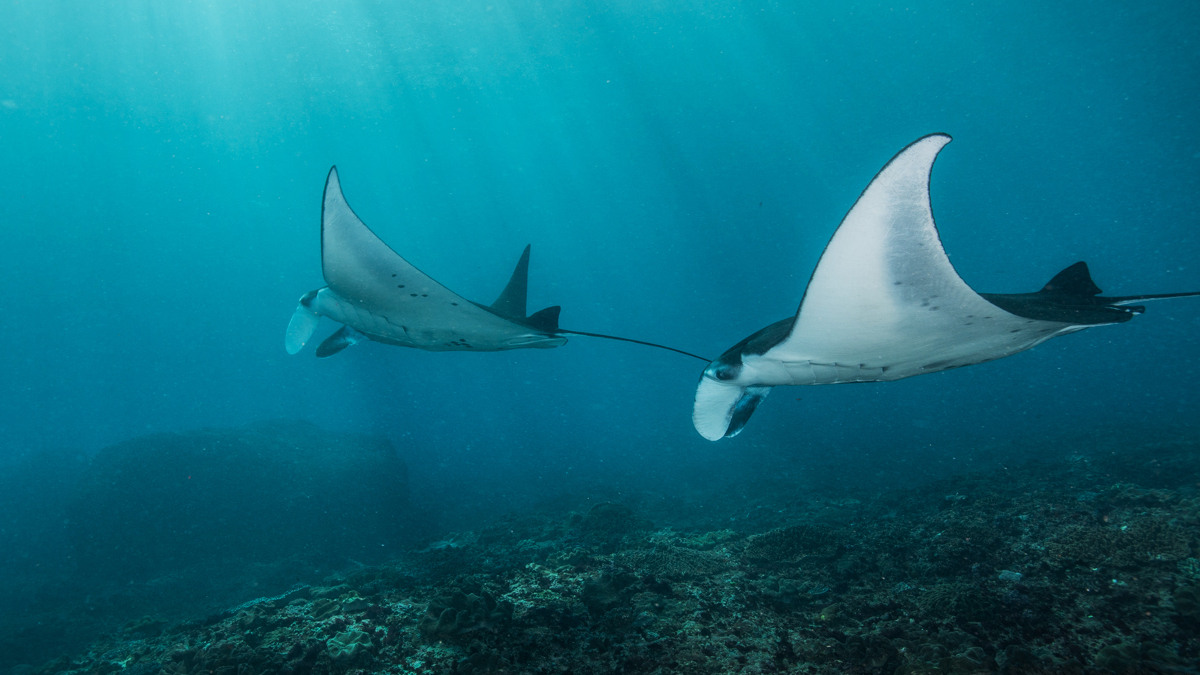
As the dive site name suggests, manta rays are the number one species divers are hoping to encounter when diving Manta Point. Here, the species we encounter are reef mantas (Mobula alfredi). They spend around eight hours a day at the cleaning stations, making the chances of encountering them pretty high, with sightings on roughly 85 to 90 percent of dives at Manta Point throughout the year, although sightings are never guaranteed.
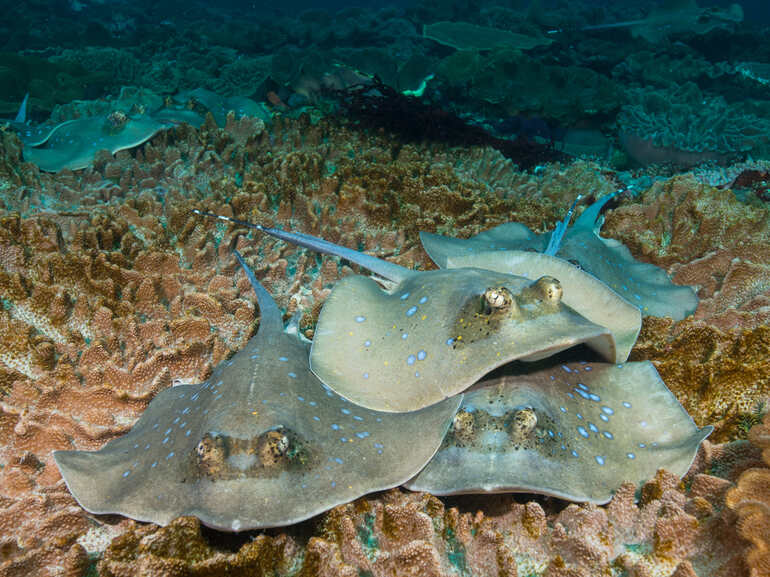
Beyond the manta rays, there is plenty of other marine life to look out for when diving Manta Point. Along the sandy areas surrounding the reef, blue-spotted stingrays love to bury themselves in the sand, sometimes leaving just their eyes exposed as they observe divers swim by. They also like to “pancake” at this dive site, huddling together in numbers!
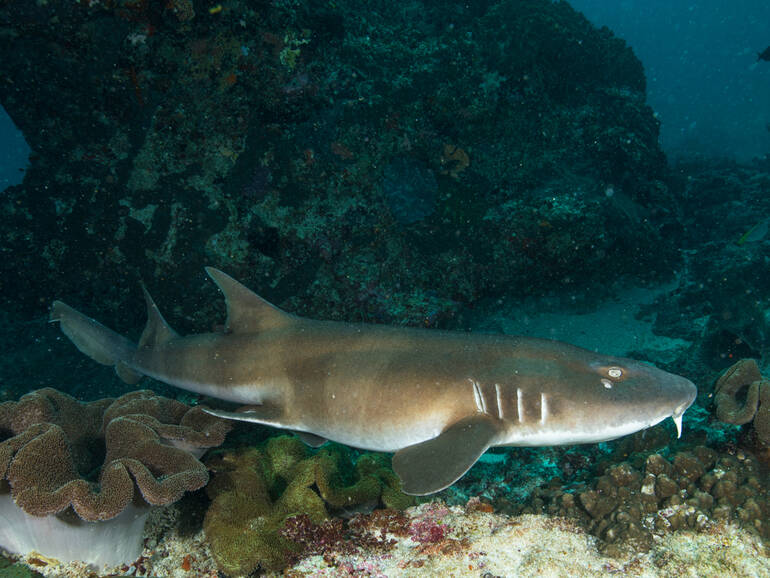
If you take the time to look closely, octopus can often be found hiding in cracks and crevices throughout the reef. Their presence is one of the reasons bamboo sharks can sometimes be encountered when diving Manta Point, as they slowly patrol the reef in search of food, or rest under rocks and ledges during the day. Additionally, for macro lovers, nudibranchs can also be found scattered across the reef.
Unlike many of the dive sites around Nusa Penida, we very rarely experience any current when diving Manta Point. Instead, it is common to experience surge and swell, which play a big role in the conditions here. Surge refers to the back-and-forth movement of the water, while swell creates an up-and-down motion, both influenced by surface weather and ocean conditions.
Water temperature when diving Manta Point varies throughout the year:
Visibility at Manta Point averages around 10m to 15m year-round, with good days reaching up to 25m. We often see the best visibility at Manta Point during the low season months from November to April, a benefit we explore in our ‘diving with us in low season‘ blog.
Occasionally, short-term factors such as changes in island currents can reduce visibility significantly, sometimes to less than 2m, but this is usually temporary and tends to clear within a week.
We are proud Whale Shark Level supporters of the Marine Megafauna Foundation, who provide education and internationally recognised codes of conduct for divers and snorkellers when encountering all our ocean’s majestic giants, including manta rays.
We will always provide a code of conduct briefing before diving Manta Point and you can find the code of conduct posters at the dive centre.
These guidelines ask divers to maintain a distance of at least 3 metres from manta rays and to avoid entering their cleaning stations, in order to respect their boundaries and allow them to move freely through the area. This means not swimming over the top of a cleaning station or up the sides of it, however, you are allowed to hover near the base to observe manta rays as they circle overhead.
Photographers may use flash / strobes for belly shots but are asked to avoid using them near the eyes of mantas when diving Manta Point. We encourage divers to submit their manta belly ID shots to Manta Matcher – a citizen science database. There are over 800 identified individuals in the database for our area!
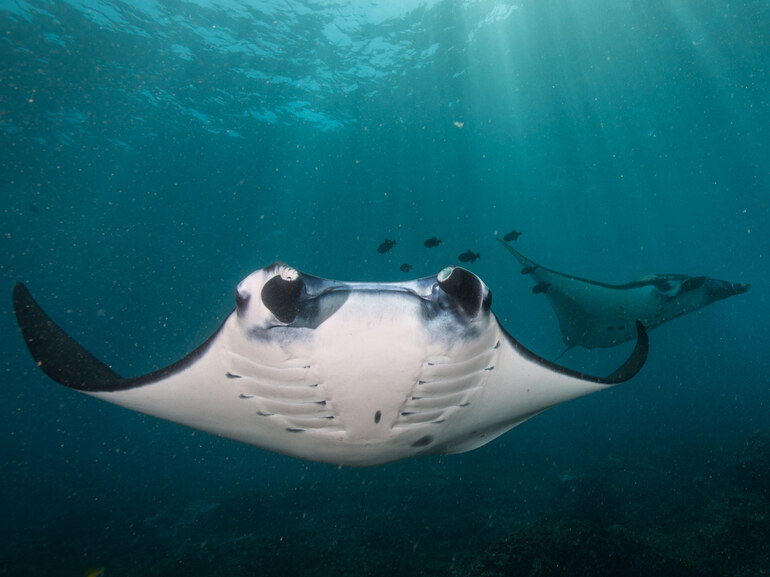
At times, manta rays can be curious and may choose to approach divers more closely on their own. If this happens, we simply maintain our position and allow the manta rays to control the interaction. Touching, harassing, or attempting to chase manta rays when diving Manta Point is not allowed, as this can disturb their natural behaviour and interrupt cleaning activity.
While manta rays themselves do not have a sting in their tail, those blue-spotted stingrays resting in the sand do. Being aware of your position in the water column and avoiding uncontrolled descents helps prevent accidentally disturbing a stingray that may be partially buried beneath you.
Buoyancy Control: Moments spent encountering manta rays often mean stopping in one place, which makes good buoyancy control essential. It’s easy to become distracted during an encounter and not realise you’re slowly dropping onto the reef or floating up toward the surface. Staying neutrally buoyant allows you to enjoy the moment without damaging the reef or compromising your safety. Learn how to perfect your hover and other buoyancy skills with the PADI Peak Performance Buoyancy Specialty.
Staying Close To Your Guide: Manta Point is one of the island’s most popular dive sites, which unfortunately means it can be quite busy, especially during peak season. With manta rays often passing by, it’s easy to stop on the plateau and become absorbed in the encounter, and combined with the flat, open nature of the site, it’s surprisingly easy to lose your orientation. Before the dive, make a mental note of what your guide is wearing, such as fin colour, mask, BCD, or any distinctive regulator hoses as this helps ensure you remain oriented and avoid accidentally continuing the dive with another group.
Diving In Surge: When dealing with surge, the key is to work with the water movement rather than against it. Kick gently when the surge moves you forward, and stop kicking when it pulls you back. Trying to swim against it won’t get you anywhere and will only waste energy and air.
Diving In Swell: When diving in swell, there isn’t much that can be done to avoid it, but maintaining good buoyancy and remembering to equalise as you’re pulled down makes a big difference. In most cases though, the swell only comes in sets of a few waves at a time before calming down again.
Manta Point provides an effective training environment for several courses, with its flat reef, distinctive boulders, and open layout offering clear landmarks, while natural surge and swell add valuable real-world learning conditions.
The shallow areas around the boulders make Manta Point suitable for Discover Scuba Diving experiences, where the maximum depth is limited to 12 metres, which is the same depth limit used for Open Water Course dives 1 and 2. Manta rays can be encountered anywhere around the site, including in very shallow water and right up to the surface, meaning beginner divers still have the chance to experience an unforgettable manta encounter without needing to dive deeper.
Manta Point is particularly well suited for navigation-based training, such as the navigation dive in the Advanced course and search patterns in the Rescue course. The flat reef, scattered boulders, and distinct features make it easier for divers to recognise natural landmarks and practise natural navigation, while also providing clear reference points for compass swims. Sandy areas can be used for buoyancy-focused training, and the presence of surge and swell allows divers to further fine-tune buoyancy control and situational awareness in real ocean conditions.
For Divemaster training, Manta Point is an excellent site for developing guiding skills. Unlike the majority of our reefs here which are sloping and naturally guide divers along the slope, the flat plateau at Manta Point requires more deliberate navigation and planning. This makes it ideal for guiding practice and mapping projects, as candidates must rely on landmarks, headings, and spatial awareness rather than depth changes alone.
Is diving Manta Point on your bucket list? Get in touch today and our reservations team will be happy to help you plan your next visit to us!