We provide daily dive trips and dive courses around the island of Nusa Penida, Indonesia
Looking for tips and tricks about diving, marine life or what to do in Nusa Penida? Follow us on our blog for weekly updates from the team!





If you are new to diving, you’ve just discovered a whole new world beneath the waves, teeming with vibrant marine life and captivating underwater landscapes. It’s an exhilarating experience that excites many beginner divers in their first few dives and has most likely ignited a sense of adventure and curiosity, leaving you eager to dive more.
However, like any new hobby, diving comes with its own set of challenges. Mistakes are inevitable, especially when you’re just starting out. That’s why in this post, we’ll break down some of the most common mistakes beginner divers make, the potential consequences these mistakes can have underwater, and most importantly, the techniques and tips to help you avoid them so you can dive with greater confidence and ease.
Sometimes beginner divers may unintentionally neglect the training they’ve already received, forgetting that organisations like PADI carefully structure their courses to prepare divers for each level and type of diving. When divers move beyond the limits of their training, this is when mistakes often start to appear.
Every course is built around specific skills and procedures designed to equip divers with the necessary knowledge and abilities for their diving level, especially for beginner divers who are still developing confidence underwater. This is also why dive centres ask about your certification level and recent dive experience when booking dives. These questions help the dive team understand your capabilities so they can plan dives that are both safe and enjoyable for everyone.
Increased Risk of Dive Accidents – Ignoring training protocols can significantly increase the likelihood of accidents and is one of the more avoidable errors for beginner divers. This may include running low or out of air if you fail to check your SPG regularly, as taught during training, or experiencing equipment issues due to incorrect use or missed pre-dive checks.
Increased Risk of Marine Life Injury – Not following proper techniques, such as maintaining good buoyancy control, can result in unintentional contact with the reef. This increases the risk of injury from coral or venomous marine life, such as scorpionfish, that may be resting or camouflaged on the reef.
Compromised Safety in an Emergency – Failing to apply correct emergency procedures can put both you and your buddy at greater risk. Using improper techniques in stressful situations often makes an emergency more difficult to manage than if the situation were handled as trained.
Negative Impact on Dive Experience – Ignoring aspects of your training can lead to increased stress and reduced confidence underwater. Using inefficient or incorrect techniques often makes diving feel harder than it needs to be, rather than relying on the skills taught by your instructor to keep dives smooth and enjoyable.
Follow your training and avoid attempting skills or techniques you haven’t been taught. Each course includes specific skills that are designed to be practised and refined, and if you need to repeat them multiple times to feel confident, your instructor will be more than happy to help you with this until those techniques become second nature.
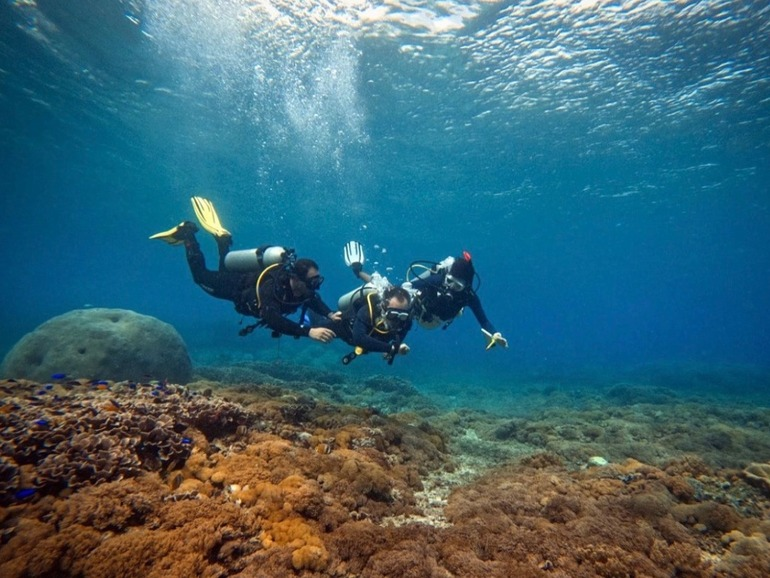
If you’re concerned about making the same mistakes commonly made by beginner divers because it’s been a while since your last dive or since completing your most recent course, we’d recommend asking for a refresher when booking your dives, or consider enrolling in a PADI ReActivate programme. These are great ways to revisit key skills and rebuild confidence before getting back in the water.
Buoyancy control is one of the most important skills in scuba diving and plays a huge role in keeping dives both safe and enjoyable. Achieving and maintaining neutral buoyancy allows divers to move effortlessly through the water. However, this level of control takes time to develop, which is why poor buoyancy control is a common challenge for beginner divers.
That said, with practice, patience, and proper guidance, buoyancy skills can improve quickly, allowing beginner divers to feel more relaxed underwater and fully enjoy their dives.
Damage to Marine Life – Poor buoyancy control can lead to unintentional contact with delicate corals, sponges, and other marine organisms, causing damage to fragile underwater ecosystems.
Increased Risk of Marine Life Injury – If poor buoyancy control causes you to accidentally collide with the reef, you increase your risk of injury from coral or venomous marine life that may be resting or camouflaged there.
Increased Air Consumption – Constant adjustments in buoyancy require more energy and results in a faster breathing rate. If you are also frequently inflating your BCD to compensate for deflating too much, this can further increase air consumption, potentially leading to shorter dive times, or the need to end a dive earlier than planned.
Increased Risk of Barotrauma – Rapid ascents or descents caused by poor buoyancy control can result in ear or sinus injuries due to the rapid changes in pressure without equalising.
Higher Stress Level – Struggling to control your buoyancy can be stressful, particularly when trying to stay off the reef or prevent yourself from floating towards the surface. This stress can build quickly and, in some cases, increase the risk of panic underwater.
Improving buoyancy is a skill that develops over time with practice and patience. Start by ensuring you’re correctly weighted by conducting a buoyancy check before each dive. This is a skill you will have learnt in your PADI Open Water course. When making buoyancy adjustments underwater, do so slowly and in small bursts until you are rising and falling naturally with your breath, which indicates neutral buoyancy.
Keep your arms and legs still while adjusting buoyancy to avoid compensating with your fins, and take advantage of dives with large sandy areas to practice your buoyancy without risking contact with the reef.
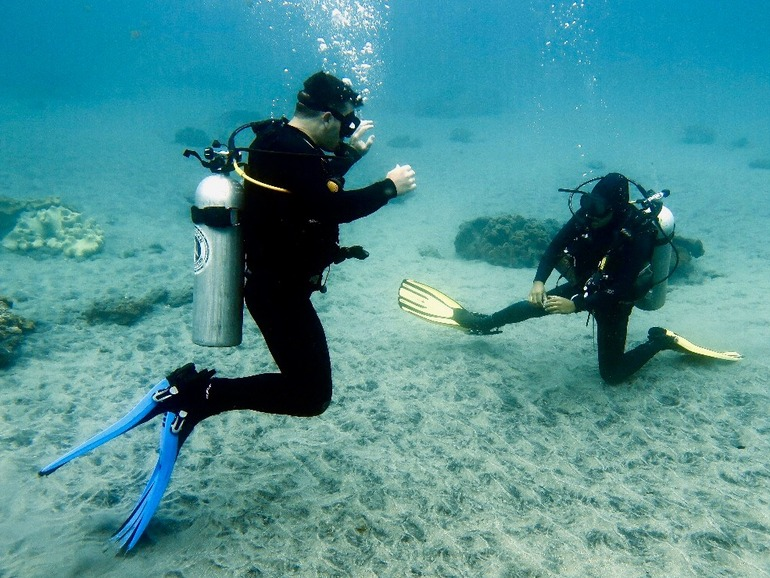
You can also seek guidance and support from your dive guide. When deflating your BCD, make sure the low-pressure inflator (LPI) hose is held high to prevent air from becoming trapped.
Make buoyancy control a focus on every dive, gradually refining your technique with persistence over time until it becomes second nature, since improving buoyancy is one of the fastest ways for beginner divers to build real confidence underwater. You can read more practical tips on improving your buoyancy in our other blog post here, or sign up for the PADI Peak Performance Buoyancy Speciality course with us.
Neglecting to thoroughly inspect diving equipment before entering the water is one of the more easily avoided mistakes of beginner divers, particularly among new divers who may not yet have enough dives for equipment checks to feel like part of their pre-dive routine. This often stems from excitement and eagerness to dive headfirst into the underwater world however, methodically checking your equipment before every dive is essential for ensuring a safe and smooth underwater experience.
Beginner divers learn during their Open Water course how to carry out pre-dive safety checks while setting up your equipment and again once you are fully geared up, just before entering the water. These checks are designed to build strong habits, and it’s important to continue doing them on every dive, not just during your training, as skipping them can lead to avoidable issues underwater.
Increased Risk of Equipment Malfunction – Failing to check things like whether your BCD fully inflates and deflates properly, or whether your primary and secondary regulators are breathing smoothly, can lead to issues underwater that compromise your safety and potentially your buddy’s safety.
Increased Risk of Breathing Contaminated Air – In rare cases, a tank may be filled with contaminated air. If you fail to check that your air smells and tastes normal before your dive, you could unknowingly breathe contaminated air underwater, which may lead to symptoms that compromise your safety during the dive.
Air Supply Issues – Failing to check if you have a full tank, or that your SPG is working correctly can result in shorter dive times, either because you genuinely don’t have enough air or because a faulty SPG fluctuates and gives inaccurate readings. Alternatively, failing to check that your air is fully turned on can lead to panic during descent when you suddenly realise you can’t breathe.
Potential Damage to Marine Life / Risk of Entanglement – If you skip checks once you’re fully geared up, you may miss the opportunity to streamline your equipment. This can result in hoses dragging across the reef or becoming caught on coral or other objects, increasing the risk of damage to marine life and creating unnecessary hazards for yourself and your buddy.
Establish a strict routine when preparing for your dives and stick to it every time before entering the water. Whether you prefer to set up your equipment first and check it straight away, or get into your wetsuit first, is entirely up to you, but create a routine that stays the same for every dive so that it becomes an automatic habit for you.
You can use mnemonics or visual aids to aid memory recall and systematically check everything. For the pre-dive safety checks / buddy checks, you can use BWRAF (Begin With Review And Friend, or Because We Really Aren’t Fish) to help remember each step: BCD, Weights, Releases, Air, Final checks.
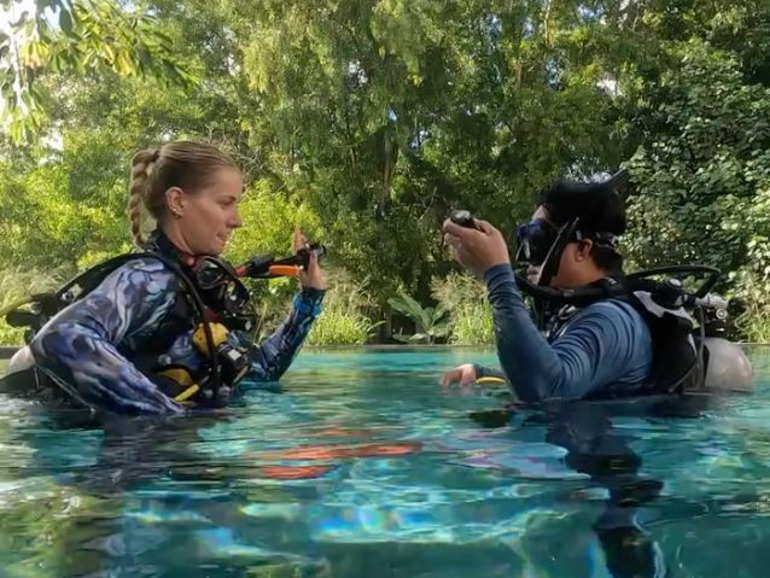
For the equipment checks you can make up your own mnemonics, or visual aid, ensuring you’re including: checking you have a full tank, smelling your air, breathing through both regulators whilst watching the SPG, fully inflating your BCD and checking it deflates using both the LPI hose and the dump valves.
Ask your buddy to help you and verify each other’s equipment. This extra layer of cross-checking helps reinforce good habits and reduces the likelihood of these common mistakes turning into problems underwater for beginner divers.
Dive plans and safety briefings are fundamental parts of any dive and are designed to protect the safety and well-being of everyone involved. Overlooking briefings may seem minor in the moment, but it is one of the mistakes of beginner divers that can have significant consequences underwater. They are not simply formalities, but essential tools that help reduce the risks associated with diving, so for beginner divers especially, paying attention to dive briefings is especially important.
Sometimes divers may not listen as attentively as they should, often due to excitement about getting into the water or distractions during pre-dive preparations. However, dive plans and safety briefings outline what to expect underwater, including entry and exit points, maximum depth, currents, points of interest and emergency procedures, all of which reinforce the vital protocols that keep you safe and are an important part of any diving routine.
Unawareness of Site Specific Hazards – Site specific hazards may include strong currents in certain areas, underwater obstacles or potentially dangerous marine life. Failing to listen to the dive briefing or review the dive plan can leave you unaware of these risks, increasing the likelihood of unintentionally putting yourself in danger.
Risk of Miscommunication Underwater – Dive briefings outline the specific signals that will be used during the dive and although hand signals are generally similar worldwide, slight variations do exist. If you are not paying attention, misunderstandings can occur, potentially leading to confusion or failure to follow instructions from your guide underwater.
Not Adequately Prepared for Emergencies – Emergency procedures are always covered in dive briefings. Not listening carefully can compromise your response if a real situation were to arise, potentially increasing risk for both you and your buddy.
Accidentally Exceeding Maximum Limits – Dive plans specify maximum limits such as depth, time, no-decompression limits (NDL) and minimum air requirements. These limits are set for that specific dive, and exceeding them can increase the risk of decompression sickness, nitrogen narcosis or running low on air.
Increased Risk of Getting Lost – Ignoring site orientation, navigation details or entry and exit points discussed in the briefing can result in disorientation underwater, leading to stress, anxiety and potential separation from your buddy or the dive group.
During dive briefings, prioritise active engagement and attentiveness. Set aside distractions, pause any other preparations and give your dive guide your complete focus so you can properly absorb the information being shared.

Many mistakes commonly made by beginner divers stem from simple inattention during a briefing, so if needed, take mental or written notes to reinforce key points, and ask questions to clarify anything you are unsure about, especially if the briefing is not delivered in your first language.
Clear communication with your buddy and guide is equally important, especially for beginner divers who are still building confidence underwater. Before entering the water, ensure everyone is aligned on the dive plan, agreed signals and safety procedures so there is no confusion once you are underwater.
If you found this blog helpful, this is just the beginning as there are plenty more insights to help you dive smarter and safer. Stay tuned for part 2 of this blog, where we’ll dive into more common mistakes for beginner divers and how to avoid them.